
Why Your Small Business Website Isn’t Getting Leads and What to Fix First
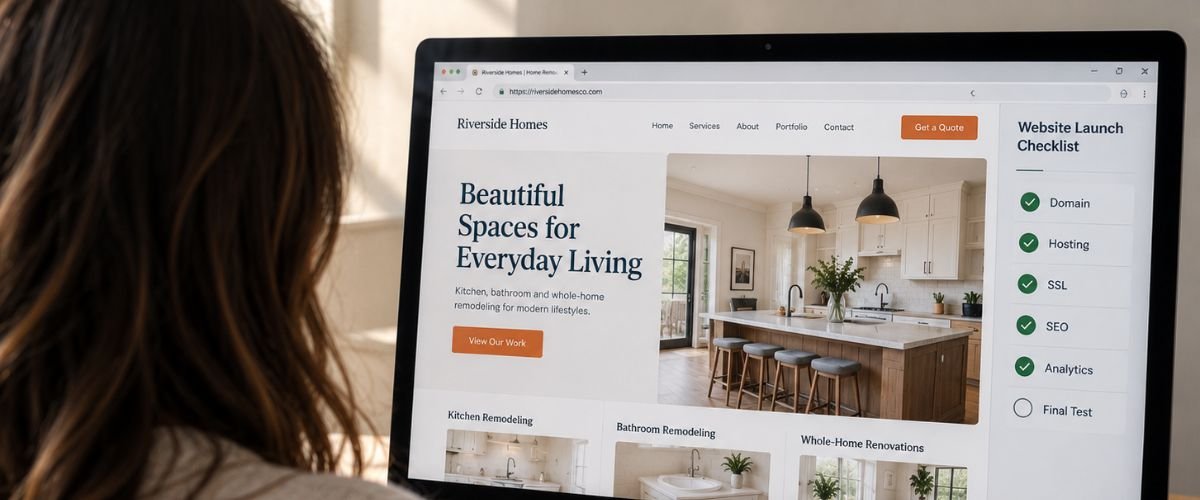
A website can look professional, contain all the right information and still fail to bring in enough customers. Many small business owners invest in a website expecting it to generate enquiries, calls, bookings or sales, only to discover that visitors arrive and leave without taking action. When this happens, the problem is not always the quality of the design. A website can look good while still making it difficult for potential customers to understand the business, trust the company or take the next step.
Your website plays an important role in how people discover and evaluate your business. Customers may find you through Google, social media, referrals or another online source, then visit your website before deciding whether to contact you. What they see, how quickly they understand your offer and how easily they can move through the site can influence whether they become a lead or leave without making contact.
If your small business website is not getting leads, the first step is not necessarily to build a new website or spend more money on advertising. Start by identifying where potential customers are being lost. The problem could be poor search visibility, unclear website messaging, weak service pages, a difficult contact process, slow performance or a lack of trust. Once you understand the problem, you can focus your time and budget on the changes that are most likely to improve your results.
Your Website May Have a Traffic Problem or a Conversion Problem
One of the first things to establish is whether the problem is a lack of relevant website traffic or a lack of conversions. These two problems can produce the same result, very few enquiries, but they require different approaches.
If hardly anyone is visiting your website, the issue may be related to search engine optimization, local search visibility, keyword targeting or the quality of your website content. Your business may offer exactly what people are looking for, but potential customers cannot contact you if they do not know your business exists or cannot find it when they search online.
A conversion problem occurs when people are already visiting your website but are not taking action. You may have visitors coming from Google or social media, yet very few people complete your contact form, call your business, request a quote or book a consultation. In this case, getting more traffic may not solve the problem because the website itself is not doing enough to turn interest into action.
Understanding the difference is important for small businesses. More visitors are only valuable when they are relevant and have a genuine reason to consider your services. Before investing in more traffic, look at what happens after people arrive on your website.
Your Homepage May Not Be Making Your Business Clear
Your homepage is often the first page a potential customer sees, and visitors should not have to spend time figuring out what your business does. Someone arriving from a Google search, social media post or referral should be able to understand your main offer and who you serve without navigating through several pages.
A clear homepage should communicate your value quickly. Visitors need to understand what your business provides, what problem you solve and why your service may be relevant to them. The opening section should lead naturally into the rest of the website, allowing visitors to find your key services, learn more about the business and take the next step.
Many small business websites spend too much of their most valuable space talking about the company rather than addressing the customer’s needs. Information about your history, experience and values can help establish credibility, but it should support the customer journey rather than make it difficult for visitors to understand the actual offer.
Look at your homepage from the perspective of someone who has never heard of your business. Can they tell what you do within a few seconds? Can they find your main services easily? Is there a clear reason to continue exploring the site? If the answer is no, the homepage may be one of the reasons your website is not generating leads.
Your Service Pages Need to Answer Customer Questions
Your service pages are where many potential customers decide whether your business can actually help them. A page that simply lists a service name and gives a short description may not provide enough information for someone who is comparing providers.
A strong service page should explain what the service includes, who it is for, what problem it addresses and what the customer can expect. It should answer common questions and remove uncertainty before asking the visitor to make contact. The more complex or valuable the service, the more important it becomes to provide enough useful information to support the decision.
Service pages also have an important role in search engine optimization. Instead of expecting your homepage to rank for every service you offer, individual service pages allow you to create relevant content around specific searches and customer needs. Someone searching for web design services, SEO or social media marketing should be able to reach a page specifically focused on that service.
Your service pages should also connect naturally to your contact process. Once someone understands what you offer, they should not have to search through the website to find out how to get started.
Your Website May Not Be Building Enough Trust
Getting someone interested in your service is only part of the challenge. Before contacting your business, visitors often want reassurance that they are making a sensible decision. A professional website can create a good first impression, but trust usually requires more than a polished design.
Customer reviews, testimonials, examples of previous work, case studies, professional experience and relevant credentials can all help demonstrate credibility. The type of evidence you use depends on your industry. A web design business can show completed websites and client projects, while a professional service company may place more emphasis on qualifications, experience and customer results.
Specific evidence is generally more useful than broad claims. Telling visitors that your business provides excellent service does not explain why they should believe you. Showing genuine customer feedback, explaining your experience and demonstrating what you have actually delivered gives potential customers something concrete to consider.
Your website should answer the questions that make people hesitate. Can this company do what I need? Have they worked with businesses like mine? What can I expect from the process? Are they established and easy to contact? The more confidently your website answers these questions, the easier it becomes for a visitor to move toward making an enquiry.
Your Calls to Action May Not Be Clear Enough
Even when visitors understand your business and trust your offer, they still need a clear next step. A website should guide people toward an action rather than leaving them to decide what to do after reading a page.
The right call to action depends on the page and the visitor’s level of interest. Someone reading an educational article may want to learn more about a service before making contact, while someone who has spent several minutes reading a detailed service page may be ready to request a consultation.
Calls to action should therefore be specific and relevant to the content around them. Phrases such as “Request a Consultation,” “Complete the Discovery Form,” “Discuss Your Project” or “Get Started With SEO” can make the next step more understandable than a generic button that gives no indication of what happens afterward.
A website does not need a call to action in every sentence or section. Too many competing buttons can make the experience confusing. The important thing is to provide a clear next step when the visitor has enough information and is most likely to act.
Make It Easy for Customers to Contact You
A potential customer who has decided to contact your business should not encounter unnecessary obstacles. A long form, broken contact button or difficult mobile experience can turn genuine interest into a lost enquiry.
Review the information your contact form requests. Does every field serve a useful purpose? Could some questions wait until after the initial enquiry? A form should collect enough information to start a useful conversation without making the first step feel like a lengthy application.
Your contact information should also be easy to find. Depending on your business, this may include a phone number, email address, contact form, booking option or other relevant method of communication. Make sure these options work properly and remain accessible on mobile devices.
It is also worth testing the process regularly. Submit your own form and check where the message goes. Make sure the business receives the enquiry, that confirmation messages work and that the appropriate person knows when a new lead arrives. A website cannot generate meaningful results if enquiries disappear after submission.
A Slow Website Can Affect Your Lead Generation
Website speed can have a direct effect on how people experience your business online. Visitors who have to wait for pages, images or interactive elements to load may leave before they ever reach your services or contact page.
There are many reasons a website can become slow. Large images, unnecessary plugins, excessive scripts, third party tools and poor website optimization can all contribute to slower loading. Hosting can also influence performance, particularly when the hosting environment is not suited to the needs of the website.
The important thing is to identify the actual cause before deciding how to fix it. Moving to a different hosting provider will not solve every performance problem, just as compressing images will not solve a problem caused by an unsuitable server environment. A proper review can help determine whether the issue is related to the website structure, media, plugins, scripts, hosting or a combination of factors.
A faster website creates a smoother customer experience and makes it easier for visitors to move through your pages. This matters even more when a potential customer is accessing your site from a mobile device.
Your Website Needs to Work Properly on Mobile
A website can look impressive on a desktop computer and still be frustrating to use on a phone. Since customers often research businesses from mobile devices, a poor mobile experience can affect your ability to generate leads.
Check your navigation, buttons, text sizes, images and forms on a real smartphone. Can visitors find your services without difficulty? Can they read the content comfortably? Can they complete an enquiry form without excessive scrolling or zooming? Is the phone number easy to access?
Mobile responsiveness should be part of the entire customer journey, not just the visual layout. If someone discovers your business through Google while using their phone, every stage from the first page through to the contact form needs to work properly.
A website that is difficult to use on mobile can lose potential customers without giving you an obvious indication that the problem exists. Testing the website from the perspective of an actual customer can reveal issues that are easy to overlook when viewing the site only from a desktop computer.
Your Website May Not Be Reaching the Right Customers on Google
A website cannot generate search based leads if the right people cannot find it. This is where SEO becomes an important part of your website strategy.
The purpose of SEO is not simply to attract as much traffic as possible. Your business needs to become visible for searches that relate to the services you provide and the customers you want to reach. Someone searching for general information about a subject may have no intention of hiring a provider, while someone searching for a specific service may already be considering their options.
Your website should therefore have pages that address relevant search intent. Service pages, useful articles and properly structured website content can help search engines understand your business while giving visitors a more relevant experience once they arrive.
This is also why SEO and web design should work together. Getting someone to your website is only the beginning. If the page they land on is unclear, outdated or difficult to use, search traffic may not turn into business.
Your Blog Content May Be Attracting the Wrong Traffic
Publishing blog articles can help a business reach more people, but traffic alone does not make content valuable. A topic may have thousands of searches and still attract visitors who have no reason to become customers.
The strongest business content addresses problems, questions and decisions that are closely connected to the services you provide. A web design company can publish useful information about website redesigns, website performance, lead generation and planning a new business website. An SEO company can create content around Google visibility, search intent, local search and attracting relevant customers.
This creates a natural relationship between your blog and your commercial pages. A potential customer can discover the business through an article, find an answer to an immediate problem and then move to a relevant service page when they are ready to explore professional help.
Your blog should therefore support the wider customer journey. Every article does not need to sell directly, but your content should have a clear relationship with the problems your business is equipped to solve.
Social Media Can Bring Attention, But Your Website Must Convert It
Social media can help businesses reach new audiences, build awareness and create ongoing relationships with potential customers. However, social media attention still needs somewhere useful to go.
A person may discover your business through a social media post, become interested in your services and then visit your website for more information. If they arrive at a confusing homepage, an outdated service page or a website without a clear next step, some of that interest can disappear.
Your social media and website should support each other. Social media can introduce your business and encourage people to learn more, while your website provides the detailed information, trust signals and conversion paths needed to move the relationship forward.
This is particularly important for small businesses that spend significant time building a social presence. Followers and engagement can be useful indicators, but the website should also help turn that attention into meaningful enquiries and business opportunities.
Know When Your Website Needs More Than a Few Changes
Not every website that struggles to generate leads needs to be completely redesigned. Sometimes the most effective solution is to improve the existing website by rewriting key pages, strengthening calls to action, improving speed, addressing mobile problems or investing in SEO.
A redesign becomes more relevant when the problems are structural. Your business may have changed significantly since the website was created, the navigation may no longer reflect your services, the design may feel outdated, or the current platform may make it difficult to support the functionality your business now needs.
The important thing is to identify the real problem before deciding on the solution. Rebuilding a website without addressing weak messaging, poor search visibility or unclear customer journeys can result in a newer website that produces the same disappointing results.
Whether you improve an existing website or build a new one, the focus should remain on how the website supports your customers and your business goals.
Turn Your Website Into a Stronger Lead Generation Channel
Your website should do more than tell people that your business exists. It should help potential customers discover your company, understand your services, evaluate your credibility and take a clear next step.
When a small business website is not getting leads, the solution may involve several parts of the digital experience. You may need stronger SEO to attract relevant visitors, better service pages to explain your offer, clearer calls to action to encourage enquiries, improved website performance to reduce friction or a better mobile experience to make the site easier to use.
The most important step is to identify where the customer journey is breaking down before investing in major changes. Look at how people find your website, what they see when they arrive, whether they understand your offer, what prevents them from making contact and what happens once an enquiry comes in.
A website can become a much stronger source of business when design, content, SEO, social media, performance and conversion work together. Instead of treating your website as a digital brochure, treat it as an important part of how your business attracts and communicates with potential customers.
SoMaKoo helps businesses build a connected online presence through web design, SEO, social media marketing, domain registration and web hosting. Whether your website needs stronger content, better visibility, improved performance or a complete redesign, the right approach begins with understanding the problem and building around the needs of your customers.